Two Iranian Musical Instruments from a 1889 collection: Sorna(righ) made of wood, bone, metal 31.1cm, and Ney(left) made of wood, metal 33cm at Metropolitan Art Museum. Khatam-decorated , a Persian version of marquetry using delicate pieces. |
Achaemenian era golden Rhyton shaped like a lion-head at the Metropolitan Art Museum. The ceremonial cup with the animal figure at a right angle to the cup invisibly joined by brazing demonstrates superb technical skill. |
Statue of Anushirawan the Just created by Gholamreza Rahimzadeh Arjang in 1940 at Kakh Dadgostari Tehran. Also known as Khosrau I, Anoushirvan was the most celebrated Sassanid Emperor who laid the foundations of many cities and opulent palaces, |
Tile-work in Sheikh Lotfollah Mosque of Isfahan, one of the architectural masterpieces of Safavid Iranian architecture, standing on the eastern side of Naghsh-i Jahan Square. Construction started in 1603 and was finished in 1618 during Shah Abbas reign. |
Special patterned wooden stamps used to create Ghalamkar fabrics in Grand Bazaar of Isfahan. Ghalamkar is a traditional type of hand-printed Handicraft, a patterned Iranian Fabric printed manually. |
A 3000 YEAR OLD Bronze Horse Bit excavated in Lorestan in Pergamon Museum. In ancient Iran, many kings had the suffix "asp" meaning horse in their names such as Garshasp, Gashtasp, Jamasp, Lohrasp, Vishtasb, Hidrasp, etc showing the importance of horses. |
Exhibit of a Bronze Horse Cheekpiece part of a Persian Bridle in the Cleveland Museum of Art, Ohio, USA. from 700 BC probably smuggled out of Lorestan. The Iranian Caspian horses are the oldest known breed of domestic horse that still exists |
An old peep box locally known as Shahrefarang in Tehran's Golestan Palace. At the time when cinemas were not available, these entertainment devices provided a view of the new world and were popular among curious Iranians. |
The Statue #2401 at the National Museum of Iran is one of the main works of Parthian Art. The bronze statue is a Parthian 1.94 m high, bears a short beard and a heavy moustache, while his hair is long and covers the ears. |
Actors take part in a re-enactment of the 7th century battle of Kerbala during the "Taziyeh" religious theatre performance on Tasoua, a day before Ashura commemorating martyrdom of Imam Hossein, in Noushabad, Isfahan province on December 5, 2011. |
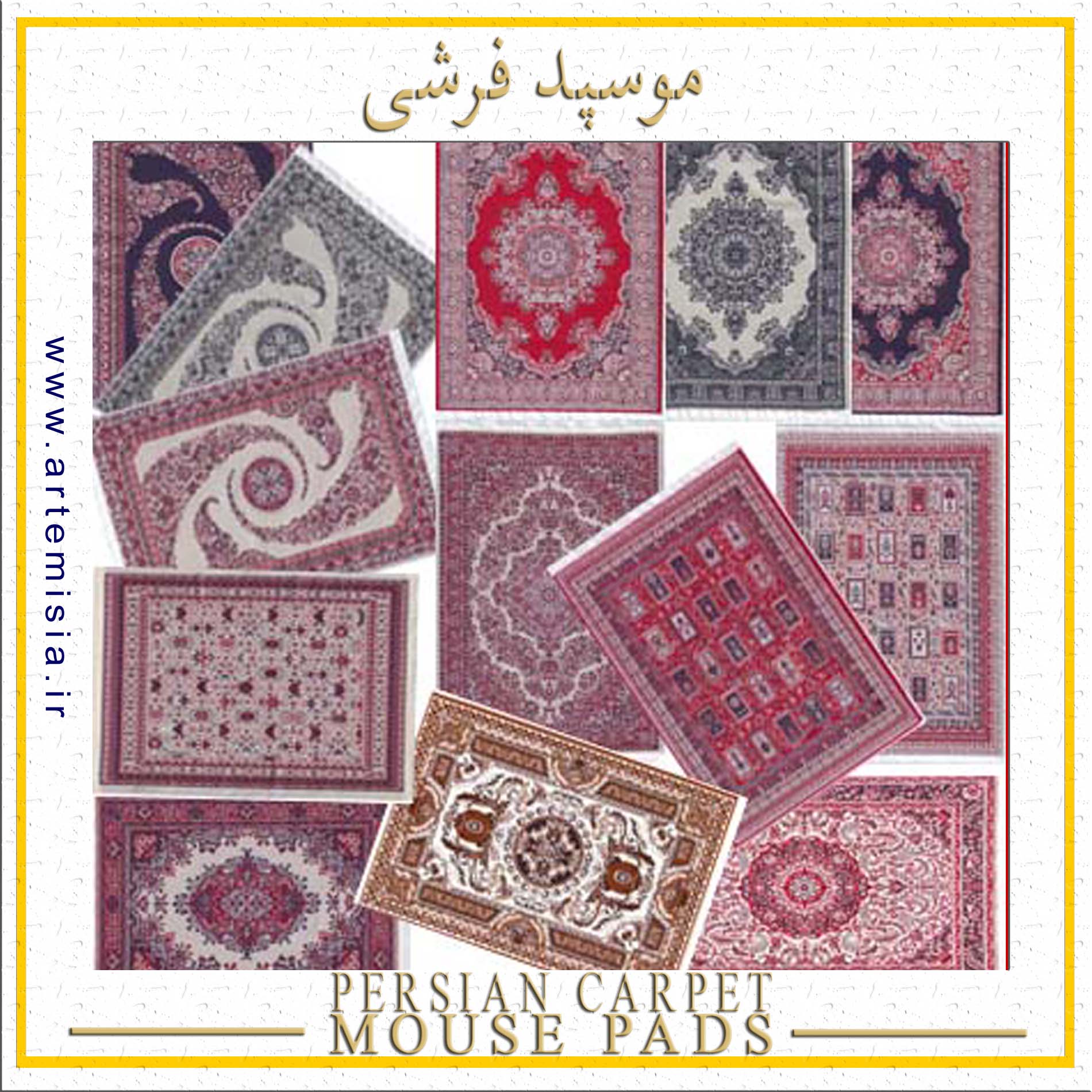
Persian Carpet Weavers in a workshop in Qom. The silk carpets of Qom are known for their high quality and have the most small dotted ones in Iran. Iran's more than 1 million weavers produce an average of $500 million in exports a year. |
Gilan Carpet is a lesser known type of Persian silk carpet because it's almost extinct. The area was traditionally a center for silk worms and production of by-products including carpets until Russian occupation in 1725 and enforced migration of weavers. |
Hasirbafi (Straw Weaving) is an example of traditional Gilan Handicrafts dating back to thousands of years, maybe as old as human history.Straws locally called "Li" are plentiful in nature. Bags, Mats, dolls and decorative hangers are some applications. |
A picturial Tabriz Carpet with images of some Iranian notables such as,Shah Ismail, Anoushirvan, Nader Shah, Shah Abbas, etc. The Tabriz Rug is a famous branch of Persian Carpet produced in the West Azarbaijan Province of Iran. |
Muqarnas at the front iwan of the Vakil Mosque in Shiraz.This mosque was built between 1751 and 1773, during the Zand period covering an area of 8,660 square meters.The iwans and court are decorated with typical Shirazi haft rangi tiles, |
Muqarnas at Isfahan Imam Mosque built during the Safavid period, it is an excellent example of Islamic architecture of Iran, and regarded as one of the masterpieces of Persian Architecture. Muqarnas is a decoration with painted tiles, wood, or plaster. |
Facade of entrance arcade at Imam Mosque of Isfahan.The Mosque is surrounded with four iwans, arcades. Walls are ornamented with seven-color mosaic tile. Muqarnas is a type of corbel used for decoration in traditional Islamic Persian architecture. |
The Ardabil Carpet (Ardebil Carpet) is either of a pair of two famous Iranian carpets in the collections of the Victoria and Albert Museum in London and the Los Angeles County Museum of Art. |
Amazing Brick-works at the Ceiling of Qajar-era Nasirolmolk Mosque in Shiraz near the Shah Cheragh Mausoleum. It was built by the order of Mirza Hasan Ali Nasir al Molk, one of the lords of the Qajar Dynasty, in 1876 and was finished in 1888. |
Shekl-e Shah is a rock Relief of Qajar king Naseroddin Shah and his officers in Larijan of Mazandaran. A similar artwork from the Qajar era is found in Tangeh Savashi 9 kilometers north of the Firouzkouh-Damavand road in Tehran Province. |
Monument to the Cyrus Cylinder in Balboa Park, San Diego by the House of Iran.The Cyrus Cylinder was the precursor to the modern Universal Declaration of Human Rights, a heritage of human understanding, tolerance, courage, compassion and human liberty. |
A painting depicting Sassanid king Bahram 5 showing off hunting skills by hitting a deer with an arrow that tied its foot to its ear, a poem by Nezami Ganjavi. Azadeh, Shah's maid who challenged the king is playing her harp in disbelief. |
A Girl from Charmahal Bakhtiyari Ashayer weaves a Persian Carpet, each a priceless masterpiece of art woven knot by knot.Ashayer weavers produce rugs, kelims and bags mostly shades of white and ivory, red and brown. |
People listen to performance of MANTRA, Aloys and Alfons Kontrarsky in Saray Moshir during Shiraz Arts Festival in 1972. Famous artists such as Peter Brook, John Cage, Joseph Chaikin, Merce Cunningham, Jerzy Grotowski, Bimillah Khan performed at the event |
Dancers Douglas Dunn (left), Carolyn Brown (rear) and Merce Cunningham (far right) perform at Shiraz Arts Festival, in Perspolis in 1972.The festival included music, dance and theater but the main goal was to promote Iranian cultural heritage. |
An Indian group perform at Hafeziyeh during Shiraz Arts Festival in 1975. Sponsored by National Iranian Radio & Television to proimote & preserve traditional performing arts , the cultural event attracted national and international artists, |
Taziyeh, a traditional Iranian performing arts at Shiraz Arts Festival in 1975. The Shiraz-Persepolis Festival of Arts was held annually from 1967 to 1977. It included music, dance and theater and attracted national and international artists, |
The historical Bazaar of Isfahan where people are engaged in Handicrafts. Iranian artisans hammers copper platters in his small copper smith shop; embossed pattern on copper is entirely hand-made. Markets and bazaars in Iran are usually organized by trade |
Graffiti in Tehran consists of different styles. Some are slogans painted by governmental organizations and some are works of art by citizens. during the last few years Tehran Municipality has been drawing graffiti in order to beautify the city. |
Graffiti on the wall of the former US Embassy in Tehran, July, 2007. Graffiti in Tehran consists of different styles. Some are slogans painted by governmental organizations and some are works of art by citizens. |
Dr. Shariati, one of disappeared statues in Tehran: a series of robberies during the months of April and May 2010 in Tehran, Iran, when twelve bronze statues of national heroes disappeared from public places! |
At Eternity's Gate (Old Man with his Head in his Hands) by Vincent van Gogh, lithograph, 1882, Tehran Museum of Contemporary Art inaugurated in 1977, next to Laleh Park. It has the most valuable collection of Western modern art outside of Europe and US. |
A painting shows the Iranian Prophet Zoroaster and other symbols of a Zoroastrian temple such as Eternal Fire, Ahouramazda, Angels and some events from the holy book.Gathas of Avesta proves religious transformations in old Persia through Yashts and Yasna, |
A postcard for the occasion of the Shahrivargan feast, also celebrated as ancient Persian Fathers Day is one of ancient Iranian Festivities. It is one of 12 monthly Iranian Feasts and one of Persian water festivals. |
A political Cartoon from Mana Neyestani showing Iran and Israel politicinas fighting while people exchange love and friendship. The cartoonist is known for his Iran newspaper cockroach cartoon controversy followed by nationwide riots. |
Hatred does not cease by hatred, but only by love; this is the eternal rule. - Buddha. Despite war rhetoric, propaganda and sanctions from some hostile heads of western states, world citizens love Iran and know Iranians as peace-loving people. |
Qajar arts, Painting on a rectangular mirror case with pictures of Saint Mary and baby Jesus Christ the Messiah. He is the central figure of Christianity and whom most Christian denominations worship as the Son of God. |
In 1609 two ambassadors of Shah Abbas 1st the Great Aliqoli Beg and Robert Sherley, were received by Pope Paulus V: the event is magnificently depicted in the Palace of Quirinale in Rome, signaling strong commercial ties between Persia and Italian states. |
A painting shows the Ambassador of Safavid king Shah Abbas 1st in Europe. Abbas I as a new Ceasar being honoured by the trumpets of fame and the Persian embassy in Allegorie de l Occasion. |
Two lions guarding the Statue of Amir Ismail Samani in the city of Doshanbeh, capital of Tajikistan. Amir Ismail Samani was the founder of the Samanian Dynasty, a vassal of the Abbasid Caliph that ruled over the Greater Khorasan and Vararood |
The Parthian Battery, is the common name for a number of artifacts created in Mesopotamia, during the dynasties of Parthian or Sassanid period (the early centuries AD), and probably discovered in 1936 in the village of Khuyut Rabbou'a, near Baghdad, Iraq. |
A painting by Le Brun shows the battle of Granicus in 334 BC which took place near the Hellespontine at the crossing of the Granicus River between forces of invading Macedonian Alexander and the Persian Satrapy Arsames. |
Elamite era Human Head Terra Cotta found in Susa, Khuzestan 2nd Millennium B.C. This kind of artwork is the most primitive form of arts and self-expression and details in creation of this lady shows some importance, affection or obsession. |
Gray color 1st & 2nd Iron Age Pottery found in Deylaman. Emergence of grayscale pottery is directly related to discovery of iron which coincided with migrations of Arians. This phenomenon was first observed in northern parts of Iran. |
Elamite era Painted Pottery spouted for serving liquids (water, oil, wine, etc) related to 1st Millenium B.C. excavated at the historical Sialk Hill in Kashan. Artifacts of the Sialk Hills (mound) give us examples of earliest shapes and scripts in Iran. |
Elamite era clay Toy Animal figures found in Susa Khuzestan 2-3 millenium B.C. These small statues are in the shape of sheep, goat and probably dog that may have had other use such as decoration or religious symbols. |
Artifacts found in Egypt in 2009 by two Italian archeologists allegedly belonging to the lost army of Achaemenid king Cambyses who disappeared after walking into the an oasis in a desert in Egypt. For political reasons the findings were not authenticated. |
A boutique in Lahijan/Gilan has set a Traditional Dress known as Ghasemabadi which is a colorful attire used by villagers on special occasions. Ghasemabadi is also the name of a traditional dance displaying work on a Bijar (rice field) |
A stone with an Achaemenid figure of a Lion devouring a Bull similar to the carvings in Perspolis may have been used as a piece of balcony originally but it somehow found its way to Mohsen Moghaddam's house which is now a museum in Tehran. |
Tehran Imam Ali Javanmard Ghassab Painting. According to legends Javanmard was a devoted Shia Muslim but did not recognize Imam Ali but later cut his own eyes and arm out and sent them to Ali in grievance demanding for forgiveness. |
A miniature Painting visualizing a tragic scene from Shahnameh Ferdowsi where Rostam unknowingly kills his own son Sohrab.Shahnameh chronicles the legendary history of the kings of Iran from Keyumars to Yazdegerd III. |
A replica of Iran Air airplanes decorates a Window Shop in Tehran selling uniforms, badges, etc Dec, 2011. |
In the painting School of Athens by Rafael in Vatican, Iranian Prophet Zoroaster (Right Corner) is presenting a globe of Heavens to Ptolemy who is holding a globe of Earth.Scuola di Atene is one of the most famous paintings by the Italian artist Raphael. |
A relief in Tang Chogan in Kazeroon near Bishabour in Fars Province shows Sassanid king Bahram 2 known as Sakanshah after a victory against Arab tribes.Tang Chogan is a valley where Sassanid kings used to play polo. |
Depictions of Prophet Mohammad an Illustration of Ferdowsi Parable of the Ship of Faith, Folio 18 from the Houghton Shahnama of the Metropolitan Museum of Art, produced for Shah Tahmasp I (1530-1535 By Mirza Ali) |
Illustration from Shahnameh Kiani king Kay Khosrau engaged in a Battle against king of Turan Afrasiab.n 1430. Bayasanghor Shahnameh was made for Prince Bayasanghor (1399-1433), the grandson of Teimur Lang(1336-1405) |
Iranian Embassy in London/ UK severely damaged by fire after a terrorist Attack in May, 1980. After a decade the British government agreed to repair the damage to the embassy in London only if Iran would pay for repairs to the British embassy in Tehran, |
The Battle Of Issus 333BC ended with Persian loss: Painting by Albrecht Altdorfer in 1529.Dariush 3. gathered a large army from the depths of the empire, and maneuvered to cut the Macedonian line of supply, requiring Alexander to countermarch his forces. |
Achaemenid and his concubine Barsineh (Statira 2.) playing Harp in an illustration from 1890. Barsineh or Statira 2nd (340/339-320) was the daughter Dariush 3rd, the last Shahanshah of th Achaemenid Empire who became captive at the battle of Issus. |
Family of Achaemenid king Dariush the 3d became captive after the Battle of Issus with Macedonian Alexander. Dariush deserted the battlefield leaving behind his wife Statira, his mother Sisygambis, and his daughters Barsineh and Drypteis. |
Prehistoric Petroglyph near Rafsanjan depicting wildlife as it was to primitive residents of the area. Rock Arts and Rock Museums Rock arts or petroglyphs are the oldest historical traces left behind from the ancient men. |
The Golden Ring of Khuzestan was accidently found in a 3200 year old tomb of an Elamite man holding it. Also a dagger, golden buttons a silver jar and other precious items were excavated during a dam construction on the Maroon River. |
Safavid era painting in Chehelsotoon: Shah Abbas the Great received Uzbek Vali Muhammad Khan in 1611 and accepted to help him against his nephew Imam Gholi Khan but Mohammad Khan fell in love with a charming girl named Golpari in Isfahan and setlled there |
Among running crowd, traffic and pollution, there is always a chance to notice marbles of Tehran: Embossed image of Ferdowsi Gholhak Metro station 2011.Ferdowsi gave the final and enduring form to the Persian national epic, the Shahnameh, Epic of Kings. |
Gordafarid is one of the heroines of legendary Kiani figures in Shahnameh of Ferdowsi. first battle of Sohrab, Rostam's son in Iran is with the woman warrior Gordafarid. He easily defeats her in battle, but she as easily outwits him and eludes capture |
A 1916 Illustration from a French Magazine (Le petite Journal) shows Russian cossack army in Isfahan.As usual Iran's declaration of neutrality before the World War I was not honored by invading Russia and Britain. |
Ale-Booyeh (Buyid) Artwork early example of a Porcelain Plate around 10th century with sacred writings around it.One of the first Iranian Dynasties that ruled over a great part of Iran after the fall of the Sassanid Empire was the Ale-Booyeh Dynasty. |
Copper plate shows Sassanid Khosrau Parviz submitting to Roman emperor Heraclius (Cherub: an angel on the left is watching) Khosrau started a in 602 that lasted for 25 years and exhausted both the Sassanid and the Byzantine Empires. |
Miniature painting from Ostad Kamaloddin Behzad illustrates a poem from Haftpeykar of Nezami in which Khornagh Castle/Palace is being built Castle in Hirah (an ancient city located 6 km south of Kufah in south-central Iraq) Satrapy of Sassanid Empire. |
Phoenicians appeared 2500 B.C. in Arabian Pennisula and then settled in today's Lebanon. Embossed depiction of Phoenicians transporting famous Lebanon Cedar trees by trireme in Sargon's Palace. 8th century B.C. |
A 16th century map of the city of Soltaniyeh and the blue dome of the Soltaniyeh Mosque by Ottoman Nasuh. Soltaniyeh is the capital of Soltaniyeh District of Abhar County, Zanjan Province, Iran. |
Coronation scene of the Kiani King Manouchehr depicted in Shahnameh of Ferdowsi. Fereydoun crowns his grand-grandson Manouchehr and retires.Manouchehr’s attempt to avenge his grandfather’s murder initiated the Iranian-Turanian wars. |
Safavid king Shah Abbas sent Ambassadors Europe who visited Russia, Norway, Germany, and Italy. Fresco in the Doge's Palace in Venice depicting Doge Mariano Grimani receiving the Persian Ambassadors, 1599. |
A page from Haftorang, the most important book of the Safavid era after the Shahnameh of Shah Tahmasp. It shows a hamam (Persian bath) Apart from cleaning and shaving, hamam was also a place for socializing eating, drinking and entertainment. |
Safavid arts evolved in many directions such were paintings on the walls and in books. The fine example of bookbinding shows a scene where the royal family rest and entertain themselves in the nature: trees, flowers, animals were used fo decoration. |
Vase from the Jiroft region. A two horned figure wrestling with serpents.The Jiroft Civilization hypothesis proposes that this style belongs to a previously unknown civilization while some archaeologists view it as Elamite culture. |
Achaemenid artwork; a bronze Rhyton in the shape of an ibex. A rhyton is a a drinking-horn, a container from which fluids were intended to be drunk, or else poured in some ceremony. |
Alexander meets Roxana. A painting by Italian artist Pietro Rotary shows the encounter. In his conquest of Persia, daughter of the Bactrian Satrap was captured. Alexander married her either for love or as an effort to gain Persian aristocracy. |
Sassanid Horse Head made of Silver and Gold found in Kerman now in Louvre Museum. It is a luxurious piece of Iranshahr craftsmanship of the 4th century AD. Most such artifacts were plundered and melted for the metals, few smuggled and kept in collections. |
Court ceremony of Fathali Shah Qajar was later added to Sassanid Taghebostan complex in Kermanshah. The Qajar were trying to somehow legitimize their reign by such acts as relating themselves to other Iraniani dynasties. |
Sassanid Taghebostan Relief Shapour 2 in crowning eremony of his son Shapour 3 .Tagh-e-Bostan and its rock relief are one of the 30 surviving Sassanid relics of the Zagros mountains.Figures of the two kings have been carved in silhouette. |
The Imam Square in the city of Sari in Mazandaran province. The legendary Kiani hero Arash the Archer rides his chariot. Horses seem to have a wild spirit and this may have disturbed some Aniranian people who ordered its removal. |
Mashhad: A young Iranian artist works on a Painting on a wall from Shahnameh of world-famous Ferdowsi. However, pan-Arab Aniranian zealots ordered destruction of more than 2000 meter square of artwork depicting Talebanism towards Iranian national heritage |
Achaemenid king Dariush 3. gives battle to Macedonian Alexander at Issus. Albrecht Altdorfer painting on limewood. Dariush leaves the battlefield leaving his mother and daughters behind. He coulde not recover from this shame and lost remaining battles. |
A scene from Shahnameh (the epic of kings) by famous Iranian poet Ferdowsi shows the pahlevan Rostam Dastan killing the Dragon while his white horse Rakhsh watches on. Rostam was from Zabulistan in Persian mythology and son of Zal and Rudaba. |
A fine modern example of Persian Arts: Iranian Miniature evolved in digital age. A beautiful Woman is serving Wine and playing a musical Instrument.It is difficult to trace the origins of the Persian miniature, as it flourished during the Safavid period. |
An Iranian Miniature showing a woman holdhing glass of wine in front of a man: A Persian miniature is a small painting on paper, whether a book illustration or a separate work of art intended to be kept in an album of such works called a moragha. |
A sample of Persian Miniature Painting in Ferdowsi's epic of kings ( Shahnameh). The picture shows Pahlevan Rostam sleeping while his famous horse Rakhsh fends off a lion. The painting is attribute to Sultan Mohammad. |
Abbasid forces led by Iranian General Afshin defeat the Byzantine army at the Battle of Anzen on July 21, 838. Miniature from Madrid Skylitzes shows Emperor Theophilos retreating towards a mountain. |
Wall Painting showing Manichean Priests from Khocho ruins, 10th/11th century CE Sassanid era religion Manichaeism religion was founded by the Iranian prophet Mani.Mani re-presented the conflict between light and the material world of darkness |
Self made Manichaeism Painting Priests from a Book. Mani was a Sassanid era prophet soon considered a threat for the hegemony of the clergymen of his time and thus the Zoroastrian priests paved the way for his execution. |
Leaf from a Manichaean Book. Khocho, Ruin K. 8th/9th century AD. Painting on paper shows Manichaeism Priests. 17.2x 11.2 cm. Mani believed humans are created as vegetarians and that lust and passion towards women can corrupt a man. |
Sassanid Glass with an image of Khosrau 2. Sassanid glass is frequently referred to as Pre-Islamic Glass in which decorations usually consists of solid and visual motifs from the mould (reliefs),. |
Tehran Metro Taleghani Station A copperwork showing Arash Kamangir (the Archer) a legendary Kiani hero that put all his stregnth and his life in an arrow defining the borders of Iran. Although half of the arch is missing, it's appealing. |
A 19 century (1839-1841) painting from Naghshejahan Square in Safavid Isfahan from French architect, Xavier Pascal Coste, who traveled to Iran along with the French king's embassy to Persia in 1839. |
Tehran Baghemelli Entrance: Seeing an amateur Painting using watercolor gives a good feeling about the future of arts in Iran.The Qajar era Baghemelli compound is located in central near the Imam Khomeini (Toopkhaneh) Sq. of Tehran. |
Embossed depiction of Achaemenid era Deity: Faravahar in Perspolis. In Zoroastrianism, the oldest known Monotheist religion in the world, Faravahar is said to be a reminder of one's purpose in life Happines through Nice Thoughts, Nice Words and Nice Deeds |
An illustration from Qajar era Iranian painter Darvish Sevrugian from Shahnameh of Ferdowsi. Having received an important letter of their army commander Geshdawz, Giv, Goodarz, Bahram, Farhad and Gorgin meet at Toos to discuss it. |
Rows of Embossed Achaemenid Spearmen on Perspolis Stairways wearing long attire and a ceremonial hat which resembled a flower in harmony with beards carefully styled. They carry bows on their shoulders and a container of arrows in their back. |
The symbol of Faravahar is visible on Tehran's Firooz Bahram School. Faravahar is an angel in ancient Iranian religion promoting Clean Thoughts, True Words, Nice Deeds; Three main founding columns of Zoroastrianism. |
An artwork in memory of the Persian Poet Hazin Lahiji in Lahijan. The tilework has been severely damaged probably due to vandalism but it still looks good. Hazin Lahiji is the 16th generation after Sheikh Zahed Gilani. |
Embossed piece of art at one of Metro stations in Tehran. Group of a Musical Band dressed in Qajar style are performing with drums and trumphets announcing some good events such as Norooz, Ramazan or similar occasion. |
Embossed artwork in Lavasan shows the legendary hero Rostam fighting a Dragon. The epic of Shahnameh is one of many Iranian resources whose figures have not adequately been promoted for future generations to replace fake Hollywood role-models. |
Statue of a Mother holding her child in Lavasan, a common figure showing respect for value of mother who is the foundation figure in every society providing basic physical and emotional care that shape the future of new members. |
Sassanid king Hormazd 2. is seen on Horse toppling his enemy by a spear in a Naghshe Rostam Rock Relief. Almost nothing is known of the reign of Hormazd 2, except that he was the 8th Sassanid king, and son of king Narsi of Persia. |
A Tehran police officer directs traffic at Naderi Intersection south of the British Embassy 1935. Today, the historical Tehran is overflowing with noise and air polution and little is done to protect whatever is left of it. |
The rebel leader Vahyazdata in Behistun Inscription. The relief shows that he was brought before Achaemenid king Dariush the Great in chains after he proclaimed king together with 9 other usurpers.Vahyazdata was a Persian nobleman in the army of Cambyses. |
Artwork in a park in Lahijan: a giant porcelain tea-pot hanging in the air constantly pouring into a cup. It's one of many attractions of Lahijan accompanied with Gilan's natural beauties. Tea & cookies are two main symbols of the city of Lahijan. |
Roman General Marc Anthony meets Cleopatra, the Queen of Egypt and fell in love. Antony was defeated by Octavian at the naval Battle of Actium, and in a brief land battle at Alexandria. He and his lover Cleopatra committed suicide shortly thereafter. |
The oldest known Persian Carpet ever found is the Pazyryk carpet carbon dated to Achaemenid era. Persian handmade carpets have always been an essential part of the Iranian lifestyle and culture although they are considered luxury in some other countries. |
At the museum of anthropology of Shiraz in Fars province of Iran, a wax figure of a Lady weaving a Persian Carpet. Carpet-weaving is undoubtedly one of the most distinguished manifestations of Persian culture and art, and dates back to ancient Persia. |
Different locks from Safavid and Qajar era on display at Abyaz Palace museum inside the Golestan Palace complex. Abyaz (White) Palace, now the museum of anthropology was built on a site which used to be Agha Mohammad Khan's tower. |
A bas Relief in Behistun historical complex shows Parthian King Goodarz 2 on a horse attacking with a spear to another armored cavalryman. It can be the scene of his victory over Mehrdad who crossed the Euphrates in 49 by the help of the Romans. |
Embossed panel created during the Qajar dynasty showing the Kiani king Kay Khosrau with a dagger and a Sword. Kay Khosrau was the son of Siavash and Farangis whose father was killed by Afrasiab as narrated in Shahnameh epic of kings. |
Behistun Inscription shows Achaemenid king Dariush the Great putting his feet over the body of Bardia (Gaumata) or false Smerdis who was a magian claiming to be the brother of Cambyses. Other leaders of concurrent revolts are brought before him in chains. |
An artist: probably Ostad Shakiba’s visualization of Achaemenid Princess Atoosa in all glory and style. Atoosa is seen wearing a crown; the other woman cannot take her eyes from her. Atoosa was the daughter of Cyrus the Great and wife of Dariush the Great |
An Achaemenid Seal showing king Cambyses of Persia defeating Egyptian Paroah Psamtik III in 525 B.C. Psamtik was defeated at Pelusium, and fled to Memphis where he was captured. Cambyses was severely injured and died in March, 522 BC. |
West of the Kish Island in Hormozgan province, lays a huge object known as Kashti-e Yunani(the Greek Ship). On July, 26, 1966, on its route to Greece was stranded and 80 days rescue efforts were unsuccessful. |
A Gold Bracelet (Armlet) from the Achaemenid Empire. It was probably adorn with precious Jewels with some artistic rendering of one of well-known symbols of the Achaemenid Persia; Symmetric Griffins. |
A miniature painting shows Ottoman Victory over Safavid ruler and capturing of Nakhjevan Sultan Suleyman forces. Caucasia was the scene of endless wars between Iran and Ottoman Empire. |
An ivory relief sculpted in the 18th century shows Achaemenid Dariush III at Gaugamela battle lost to Macedonian Alexander in 331 B.C. New findings show that this battle was never fought, ending in peace because of a meteorite considered a divine sign. |
One of tens of thousands of Achaemenid foundation Tablets (#040428) lent to the University of Chicago. These clay tablets depict inner workings of the administration of the ancient Persian Empire. |
Drawing shows special Sassanid Border Patrol units in Hyrcania called Savaran. They were quickly dispatched from castles in the area for swift attacks on invading Heptalites. |
A Petrography (Petroglyph) found in Susa 5-6 century BC shows an Elamid Woman sitting in front of a spinning machine producing yarn or thread from fibers. Her attire shows the important of Clothes at a time when most humanity was savage. |
A Silver Jar (beaker) from Marlic Hills tell a story from the second millenium BC. Is the winged Lion that is giving the Qazal a kiss of death, be related to Shirzad in Perspolis. How about strange looking horses beautifully decorating this piece of art? |
Fragment of the Chalouf stele kept at Louvre, shows an Inscription by Achaemenid king Dariush the Great describing construction of a Canal connecting the Red Sea to Nile River in Egypt. |
Prince of Persia, a Disney Movie based on a 1989 computer game. One of best adventure games of all times which has had new versions ever since. In the original game, the prince (Dastan in the movie) has to venture several stages to rescue the princess. |
An artist (Rostock.a.braun) rendering of current world order where US President Eisenhower is sitting on the shoulders of an African American, ironically holding a scale showing the divine glamour of the angle of Justice in his face. |
Embossed figure of a Sagartian subject presenting a Gift at the stairs of Perspolis, the ceremonial capital of the Achaemenid Empire. Sagartia was a Satrapy until they revolted in 522 and became a subordinate of Drangians. |
A precious Tiara of Pahlavi era. Adorn with red Rubies and Laal, it's one of the most expensive Jewels of its kind. These items are on display at the Museum of national (formerly Imperial) jewels in Tahran. |
Achaemenid era Persepolis stairs Representatives of 28 nations are waiting in line to present their Gifts to the Shahanshah (king of kings). In the Achaemenid empire all people were free to exercise their own religion an culture. |
Giant Sassanid Shapour statue in a cave in Bishabour near Kazeroon was found in this situation in 1938. The 6 meter tall statue, curved out of stone, weighed around 30 tons. It's though that Arab invaders had broken it. |
A Shatranj(Chess) game set Glass from Seljuk era 12th century discovered in Iran, now on display in New York museum. Although chess is known as a board game played by two people, explorers have reported a more sophisticated version played by 3 in Iran. |
An antique Persian Carpet from Safavid era made in Isfahan around 1660, during the reign of Shah Abbas. In 2008, this artwork was sold in an auction in New York for 4.5 million dollars, another reason why buying hand-woven Persian carpets is an investment |
First Millenium BC: A Bronze Plaque(plate) found in Azarbaijan shows a mythical Hunter holding two horses by their legs upside down. |
Perspolis Columns with a Bull Head. A signature Painting in Siah-ghalam (Black-Pen) style. by Mohammad Afshar, a young talent from modern Iranian artists that are keeping alive and adding value to the glory of an ancient civilization. |
Persian carpet industry has evolved into a new era. Too precious to walk on, hand-woven carpets in all precision and elegance are created as Tablo-Farsh (Carpet Frame) A rendering of Anahita, the mother (goddess) of water in a carpet gallery in Tehran. |
An Achaemenid Golden Bust with a height of 11.3 cm, is one of numerous artifacts smuggled to Europe. Fortunately, this one ended up at British Museum. With a dazzling craftsmanship, the figure seems to belong to a religious or imperial person. |
A very interesting Pot with 4 cooking sections seems to be a practical solution to cooking delicacy for the Qajar king on display at the Abyaz palace (Museum of Anthropology) inside the site of the Golestan Palace. |
Naghshe Rostam's unfinished Rock Releif must be a work in progress during last days of the Sassanid empire. The prepared area was 10m wide and 5m tall. A new 20 lines of inscriptions in Persian is like a deal about sharing water among farms nearby. |
Lahijan Kashefossaltaneh Museum : Traditional regional shoes Galoosh (front) Choomoosh (in the back) which are no longer used |
A poetry curved on marble telling about the construction phases of Tehran's historical Sajjad Mosque at Fakhrerazi intersection 2009. Officially inaugurated on July, 4, 1947 (Pahlavi II), it was built by halp from 1016 people. |
Tehran,2009: A replica of an Achaemenid Soldier's Bust decorates a window shop at Paytakht computer center. Despite constant pressure by several invaders throughout history, Iranians stick to their history and have kept their original culture alive. |
Statues in Hezar Sangar (1000 Strongholds) Square of Amol in memory of public resistence against a communist guerila that wanted to take over the city in 1982 while Iran was in the middle of a war with Iraq. |
Reflection of light passing through Glassworks create a splendid feeling at Shiraz Karimkhan Zand Arc 2010 |
Colorful glassworks decorate a hall at Shiraz Karimkhan Zand Arc 2010 |
Afshar king Nader Shah's famous Shield which was made of Rhino skin. It was later adorn with precious jewels such as emeralds and rubies |
Nader and Sons: Afshar king Nader Shah is seen appointing his son as crown prince. Famous Daryayenoor diamond is seen on his Crown. |
A painting shows Sheikh Safi's Wedding with Sheikh Zahed Gilani's Daughter Bibi Fatemeh. Sheikh Safi was the founder of the Safavid Dynasty |
Safavid Shah Tahmasp Flag: The Safavid dynasty was a descendent of Ak Koyunlu (White Sheep) tribe |
Painting of a beautiful Iranian lady on a western wall of Isfahan's Alighapoo Palace Jan, 2010. This is one of several examples that shows Safavid rulers were found of arts and did not approve extremism in the name of Islam. |
Painting of a beautiful Iranian lady on an eastern wall of Isfahan's Alighapoo Palace Jan, 2010. This is one of several examples that shows Safavid rulers were found of arts and did not approve extremism in the name of Islam. |
Isfahan : Beautiful decoration on the Roof at Alighapoo palace has been inspiring Isfahan's craftsmen for centuries. |
Ceramic Rhyton shaped as a Bull / 1st Millenium B.C. Roodbar Marlic. It's amazing to think that people used to drink stuff out of this interesting object. |
Pahlavi era 1930s : A specially designed Truck was used for Oil Exploration in wild terrains. |
Famous painting called Ashura Afternoon decorated streets of Tehran 2009. Every day is Ashura and every land is Kerbala. The day of Ashura is dedicated to Hossein-bin Ali, the Grandson of the Prophet Mohammad and his sacrifice for Islam at Kerbala. |
Prehistoric primitive buttons made of bones dating back to 8000 BC found in Ganjdareh Kermanshah, on display in Iran Baastan museum of Tehran. If you want to know what Iranian fashion was like 10,000 years ago, then you have to visit Ancient Iran Museum! |
Prehistoric primitive stone tool flat on both sides dating back to 8000 BC found in Ganjdareh Kermanshah, on display in Iran Baastan museum of Tehran. This item could have been used for different purposes. |
Prehistoric, primitive Tools made of Bones found in Abdolhossein near Hamedan date back to 7000 BC, on display at Iran Baastan museum of Tehran. These items give us clue about lifestyle and technology of the Ancient Iran. |
Prehistoric clay statues of animals dating back to 8000 BC found in Ganjdareh Kermanshah, on display in Iran Baastan museum of Tehran. These simple statues made of clay and earliest samples of pottery shed a light on human history. |
Qajar Kiani Crown on display at the Museum of National (formerly Royal) Jewels. |
A Replica Hafez Mausoleum in Shiraz made of Khatam which is a traditional Iranian artwork mostly on wood. |
Hamedan Lion Stone / Photograph from Qajar era |
The bust of Parthian Queen Musa, Italian wife of Farhad IV wearing both a seleucid diadem and achaemenid Tiara at the Iran Bastaan (ancient) Museum. The beautiful lady was also known as the goddess of welfare and victory (Tyche) . |
Qanun of Medicine : Samanid scientist Avicenna operating on a woman, operation tools are displayed top-left. His Canon of Medicine was long a standard work in the field. |
Prehistoric Petroglyph showing some sort of Ceremonial rituals, a replica from the original found in Mazayen Valley/ Khomein. The Garden of Inscriptions at the Niyavaran Palace has an amazing collection. |
A replica of Leonardo Da Vinci's Creation of human is on display at one of Tehran Metro Stations (ask where) Tehran Metro is becoming an art exhibition where Iranian artists can put some of their talents on display although paid per kilo and meter. |
A painting at the Safavid Chehelsotoon palace in Isfahan shows people celebrating Charshanbeh Souri, a feast taking place on the eve of the last Tuesday night of Norooz (Persian solar new year on March, 20) |
Pahlavi Advertising (digitally enhanced): An old advertisement in a paper for Rooster Chewing gums. Many consider usage of beautiful females in ads as degrading women's value |
A Memorial in Tehran City Park for victims of Chemical weapons in the city of Sardasht. Chemical bombs killed thousands of civilians and left many other injured. |
A Tea processing (drying) Apparatus is on display with special baskets to collect tea leaves in Lahijan Kashefossaltaneh Museum |
A Persian handmade Carpet is designed using lyrics and paintings from Shahnameh, the Book of Kings by Ferdowsi on display at the Carpet Museum of Iran.Shahnameh chronicles the legendary history of the kings of Iran from Keyumars to Yazdegerd III. |
A Posterin Mashhad explains why a boulvard named after famous Iranian poet Iraj Mirza was renamed because of his views. Instable attitides towards prominent Iranian figures such as Molana, has given neighbouring counties a chance to confiscate them. |
Tehran Mosalla Quran exhibition: A poster mocking the famous brand Coca Cola which is supposed to support a pro-Palestine cause. |
Tehran Petroglyph Garden: A replica of the word Allah which is inscribed on cliffs in high mountains of Gharghab valley in Khomein - Markazi province |
Children enjoy an animated show which was the first form of the Iranian Cinema called Shahrefarang (the western city) on the streets |
Fouman Anahita Square Statue Night. Chariots figure prominently in Indo-Iranian mythology. Chariots are also important in Hindu and Persion mythologies, in which deities are portrayed as charioteers. |
Safavid Brass Candlestick with embossed images in Abdolazim Museum |
Embossed figure of the Sassanid king Khosrau Hunting on a Golden Plate. Khosrau 1 was married to the daughter of a Turkish Khaghan named in Armenian sources as Kayen and in the Persian sources as Qaqim-Khaghan |
Lahijan 1301 Sheikh Zahed Gilani appoints Sheikh Safieddin as his successor head master of Sufi mystics before his death. Miniature painting depicts formation of the Safavid school of thought |
Rhagae Abdolazim Museum : A bronze Bowl from Safavid era with Quranic Inscriptions |
Replica of Achaemenid artifacts part of the ambiance at Dariush Hotel in Kish Island. The 5 star hotel has 168 rooms. |
A decorated clay bowl (Pottery) found in Rhagae's Hasanabad belonging to 4000BC |
Tehran Malek Museum : A Painting shows Jesus Christ prosecuted at the Roman Court |
Rock relief in Barmedelak (Barm-e Dilak) 9 km SE Shiraz near Abunasr Palace shows Sassanid prince probably Bahram II offering flowers to his wife Anahid, showing such affection and love is very significant. Queen's dress is also remarkable. |
Cyrus (Kurosh) of Anshan Seal, son of Teispes |
Cylinder of Nabonidus king of Babylon which is before the famous Cyrus Cylinder but mentions Cyrus as king of Anshan who scattered Median empire with his small army. |
Rhagae Mashin Doodi |
Semnan Satellite Rocket Safir Omid 2008 |
Hamedan Ecbatana Stone Lion (Shir Sangi) |
Canada : Peykan Car which resmbles a shoe-box has antique fans around the world (2008) |
Persia: Digestive System as perceived in 17th Century |
Arak Four Seasons Museum: A metal Jar for rose water with geometrical designs Ilkhanates |
Rhagae Abdolazim Museum Silver Coin Ghaznavi. Sultan Mahmoud was the most prominent ruler of the Ghaznavid dynasty who ruled from 997 until his death in 1030. He turned the former provincial city of Ghazni into the wealthy capital of an extensive empire |
Rhagae Abdolazim Museum: A Bowl made of clay Seljuk era |
Rhagae Abdolazim Museum All Pahlavi Money banknotes |
Rhagae Abdolazim Museum Clay Jar with gold decoration Ilkhanates |
Rhagae Shah Abdolazim Museum Brass Bowl engraved decorated with verses of Quran/ Safavid |
Shirzad Twins : Lion Human Eagle at Perspolis ruins |
Shirzad Lion Human Eagle Perspolis Deity |
Shirzad Lion Human Eagle Perspolis Ruins. it's quite different from the Greek chimera whcih is a mythological she-monster with a goat's body and a lion's head and a snake's tail. |
Rhagae Cheshmeh (fountain) Ali Embossed Inscriptions with an image of Fathali Shah of Qajar dynasty (Middle) and his men |
A picture of Mashin Doodi in Rhagae (Sharerey) Metro Station 2009 from Back (rear) |
Sign on Mashin Doodi (the fuming machine ) in Rhagae (Shahre-rey) Metro Station 2009 that reads LAMETALLURCIRCIQUE AN DE CONSTRUCTION ATELIERS DE TUBIZE No:665 BELGIQUE 1887 |
Mashin Doodi (the fuming machine ) Rhagae Metro Station 2009 |
A beautiful Persian poem on the tomb of famous Poet Mirzadeh Eshghi Eshghi in Rey(Rhagae) Ebne-Babouyeh cemetery |
A beautiful Artwork representing the city of Tehran in Tajrish Square 2009 |
Small Statuets found in Roodbar's Marlic historical Hills and site now on display in Rasht museum |
Souvenirs & Handicrafts from Fouman's Masouleh village : Dolls |
Handicraft & Souvenirs from Fouman Masouleh village Bells |
Sign on top of the gate of Safi Mosque entrance,Rasht which took its name from Mohammad Safi Mirza, the son of Shah Abbas. It's also called Shahidiyeh because many innocent Safavid princes were killed here. |
A Gold Rhyton with two Lions found in historical sites of Gilan |
Mid Elamite Statue playing a musical instrument resembling a mandoline from Susa |
Susa Elamite Marble Statues on display in Louvre |
Second Iranian map of Tehran prepared by Darolfonoon graduates in 1892 under supervision of Aligholi Mirza Etezadossaltaneh and technical guidance of Abdolghafar Najmolmolk. |
First Iranian Map of Tehran prepared by Darolfonoon students in 1859 under supervision of Aligholi Mirza Etezadossaltaneh and technical guidance of Monsieur Kershish. Though made with primitive tools, it's prooved pretty much to scale. |
Image of Dragons from Chinese culture curved on the entrance at Dashkesin Caves Zanjan Abhar |
Dariush I or II Golden Bowl |
Embossed rosace as column head in Apadana palace in Susa |
The Cylinder of Cyrus The Great on display in British Museum |
Remaining of a statue from Artaxerxes III Ochus Achaemenid |
Artist rendering of ancient Norooz Celebrations in Perspolis |
One of Column Heads from Perspolis |
Ordered by Naseroddin Shah, the royal Belt was used for coronation ceremonies. With a 176 karat emeral in the middle of 60 diamonds and 119 cm golden belt. |
Pahlavi Princess Fatemeh's Tiara. Fatemeh was the elder daughter of Reza Shah, a half-sister of the late shah of Iran. She was estranged from the Shah because of her marriage in 1950 to an American In 1989, she died in London at age of 58. |
Pahlavi Queen Farah Diba's Tiara |
Pahlavi Queen Crown |
The 183 karats Daryayenoor (ocean of light) pink diamond is the twin of the Koohenoor (mountain of light) and one of the oldest known jewels in the world. Plunered by Teimur, it was retrieved by Nader Shah in 1739 from India. |
Ordered by Naseroddin Shah, 51366 precious stones were mounted on this 34 kg/ 66cm diameter On the golden globe Oceans and seas are emerald and land is displayed with ruby and Garnet(laal). Iran is made of diamonds. |
Nader Shah Afshar/Naderi Throne |
Pahlavi Crown was ordered by Reza Shah for his coronation ceremony in 1926 as he did not want to use the Kaviani crown. 3380 diamonds (1144 karats), 5 emeralds (199 karats), 2 rubies (19 karats) and 368 pearls were used in the crown that weighs 2.8kgs |
Kiani Crown was used by Qajar kings. This crown was ordered by Fathali Shah. Stones used are emerald, ruby, diamond, and pearl. |
Artaxerxes III Chronicle |
Twin Sphinx Mosaic Susa |
Flying Bull Mosaic Susa |
Elamite Pottery Choghazanbil |
Inscription from Elamite kingdoms from Susa |
Mid Elamite Statues on display in Louvre Museum |
Inscription of Achaemenid king Xerxes in Van-Turkey in 1973 |
Cyrus The Great Cylinder which is believed to be the first charter of human rights is on display British Museum, 2009 |
Paintings Jolfa Church : St Mary holding baby Jesus |
Paintings Jolfa Church Resurrection |
Paintings Jolfa Church Abraham |
Paintings Jolfa Church : Last Supper |
Paintings Jolfa Church : Crucification (crucifixion) |
Paintings Jolfa Church : The Altar |
Paintings Jolfa Church Birth of Jesus Christ |
Paintings at Jolfa Church (Vank) of Isfahan/Iran : Baptism of Jesus Christ Jesus was baptized in the Jordan River by John the Baptist so he could offer Himself as a sacrifice for human sins. |
The Music Hall at the Alighapoo Palace in Isfahan was designed to enjoy live music |
Jolfa Vank Church Dome which is a combination of the Safavid Islamic and Christian arts |
Painting from Jolfa Vank Cathedral showing Annunciation |
Jolfa Vank Church Altar with stunning 400 year old paintings and decorations |
Curvings in the Roof of the music room at the Alighapoo Palace was designed in a way that two musicians created enough echo for impression of a full orchestra. |
Hasanloo Golden Rhyton National Museum. The historical site called the Hasanloo Hill is located 9km NE the city of Naghadehand 13km SW of Urmia Lake. in a green area called Soldooz.The history of Hasanloo Hill goes back to 6000 B.C. |
Tehran's Reza Shah (Shahreza) Street later renamed as Enghelab St. |
Golden Rhyton Hamedan Museum. A rhyton is a a drinking-horn, a container from which fluids were intended to be drunk, or else poured in some ceremony. |
Ganjnameh Xerxes Inscriptions Hamedan |
Embossed Capricorn Narenjestan Museum Shiraz |
Statue of an Elamite Woman Praying Susa 3300BC |
Persian Deity Shirzad half lion half human, and eagle. |
Embossed Statue of Cyrus the Great in Sydney/Australia |
Embossed relief shows rebels brought to Dariush The Great in Bisotoun Inscription |
Taghebostan Bisotoun Embossed King Hunting wild boar. This example of Sassanid art is located 5 km from the city center of Kermanshah in western Iran in the heart of the Zagros mountains. |
Advertising Iranian made Jian (Citroen) Car from 1970AD 1349Sh |
A wall Painting in Chehelsotoon Palace of Isfahan showing Shah Ismail 1st of Safavid Empire in the battlefield against the Uzbek commander Mohammad Sheybak Khan. The battle ended in Dec, 2, 1510 with decisive Persian victory. |
Chehelsotoon Palace Isfahan Painting |
Soldiers look on a Horch which competed with Mercedes in late 1930s in front of the British Embasssy. The building used to be a fine example of Neo-Gothic architecture. The Persian plate # 11105 gives an idea about traffic in Tehran in those times. |
A 4100 year old statue of Narvandi Goddess found in Susa |
Iran Air Boeing 747 landing |
An Iran Air jetplane Taking Off from the runway |
Embossed Bouquets of Lotus, a symbol of Persian empire in ruins of Perspolis |
Embossed Achaemenid spearman with embossed cuneiform in Takhtejamshid (Perspolis) |
All Nation Representatives presenting gifts to the Shahanshah, stairs in Perspolis |
Embossed figure of Shirzad, a legendary figure of ancient Persia : combination of lion, human and eagle in Perspolis |
Embossed Nation Representatives in Perspolis presenting gifts to Shahanshah (the King of the kings) |
Column of embossed spearmen on Takhtejamshid (Perspolis) Wall despite centuries of vandalism and smuggling stand as a sign of pride for Iranians |
A Persian Café : Painting by Lord Edwin (1849-1903) |
A propaganda poster showing Ayatollah Khamenei mourning Imam Khomeini's death hangs in a clinic |
Embossed Anoushirvan The Just on Tehran court of justice |
Sasanian Bronze Statuete |
Achaemenid Administrative Tablet 1208-101 reads : And now Parnaka (Dariush's uncle) says: as the King ordered me, so I am ordering you: Give 100 goats to Dukshish Irtashduna, as ordered by the King." |
Bust of Seleucus Nicator, founder of Seleucid Empire kept in Louvre museum. |
Remains of Reza Shah's statue at the University of Tehran |
Embossed relief of an Achaemenid legendary deity with a human head and the body of a Lion |
Bull head that carry the roof in Perspolis |
Embossed image of an Achaemenid spearmen in Perspolis |
Twin Griffin Perspolis standing on a pedestal |
Mohammad Reza Shah's Crown adorned in precious jewels |
Oil Well Masjed Soleyman 1908 |
A well preserved relief from Farvahar, Zoroastrian deity in Persepolis. Faravahar ‘s figure incorporates both "Sepanta Minu," the symbol of goodness and "Ankareh Minu," the symbol of wickedness, as a very basic of Persian dualism. |
Embossed relief of Dariush The Great accepting representatives from alll parts of Achaemenid Empire In Perspolis |
A Safavid era painting shows soldiers playing Chowgun, known today as polo |
Traveling in Persia 1895, A painting by Edwin Lord Weeks from a journal |
Little Iranian girl playing with phones |
Iran's first train named Mashin Doodi (Smoking Machine) operating on a short trace in 1860s |
Iran's first Satellite Carrier ( Safir ) launched from the Semnan Desert Cosmodrome |
Shahrefarang : First Iranian Movie Theatres so-to-say. Iranians got first glimpses from West through these units that could serve 2-3 at a time. |
Anahita Goddess of water. Also known as Ahurani (She who belongs to Ahura) or Anahita (Nahid in modern Persian). Anahita (meaning unstained, clean and innocent) |
Valerian Philip submission to Shapour after defeat in battle. start a Persian invasion. At first successful, he was later defeated by the Persian king Shapour I and died 260 AD in captivity. |
Arian Apadana Perspolis |
Embossed Dariush1 Inscription |
Flying lion Golden Rhyton Ecbatana. A rhyton is a a drinking-horn, a container from which fluids were intended to be drunk, or else poured in some ceremony. |
Safavid Painting shows Shah Abbas 2nd, the 7th ruler of the Safavian Dynasty (born 31 December 1632; died 25/26 October 1666) he was Shah of Iran from 1642 to 1666. He was the son of Shah Safi I and Anna Khanoom, |
Boost of Sassanid King at Louvre museum |
Embossed Balash Volgases Rock Relief |
Sassanid Pottery Rhagae Dancers |
Ario Barzan Statue |
Firealtar Sassanid Magian Praying |
Dariush The Great Gold Coin named Daric. It's assumed tha Lydians went through such economic developments as the use of metallic coinage and passed the knowledge after they were added to the Persian Empire. |
Inscription of Xerxes The Great in Van Citadel in Turkey on a smoothed section of the rock face, some 20 meters above the ground near the fortress. The niche was originally carved out by Xerxes' father Dariush the Great. |
Safavi Cavalary Unit |
Bisotoon Embossed Inscriptions |
Relief from Perspolis: A subject presents a horse, one of many artifacts cut and smuggled out of Iran. Currently kept in France |
One of four Cuneiform Gold Plate in Perspolis that were buried under foundation columns. Looking for such treasures foreign and local vandals and thieves have destroyed many ancient monuments. |
Embossed image of God Faravahar in Perspolis |
Derafsh Kaviani |
Griffin Perspolis: mythological creature having the head and wings of an eagle and the body of a lion.The tombs of Dariush and Xerxes come with huge carved reliefs of ferocious lions. In 333 B.C., Persepolis was sacked and burned by Macedonian Alexander. |
Shah Ismail Safavi Statue and Fountain in Baku. Shah Ismail I (born July 17, 1487, died May 23, 1524, Ardabil) was the founder of the Safavid Empire and patron of the Shia sect of Islam. He was a good poet and philosopher of his time. |
Twin Lions Perspolis, the grand ceremonial headquarters of the Persian Empire. Immense royal tombs, reminiscent of those built for Egyptian pharaohs, are cut into the adjacent mountainside. |
Embossed figure of Ashur,Banipal, tyrant of assyria. In a tablet unearthed in 1854, Ashur Banipal boasts of the destruction he had wrought on susa. A fragmented Elamite rule was resurrected soon after with Shuttir-Nakhkhunte III. |
Xerxes Khashayarshah. Xerxes I (519-465 BC) King of Persia (486 - 465 B.C.) The son of Dariush I, he had been governor of Babylon before his succession. He ferociously suppressed rebellions in Egypt (484) and Babylonia (482). |
A girl Kisses embossed Achaemenid soldier in Perspolis, this sprawling complex of royal palaces was the awe-inspiring home of the "King of Kings" for nearly two hundred years. |
Mosaic shows The Battle of Issus (or the Battle at Issus) occurred in southern Anatolia, in November 333 BC. The invading troops, led by the young Alexander of Macedonia, defeated the army personally led by Dariush 3 of Achaemenid Persia |
Bust Macedonian Alexander |
One Night With King Xerxes |
Egyptian Admiral Wedjahor Resne |
Darius Statue in (Iran Bastan) Ancient Iran Museum. The museum is comprised of two Buildings: pre-Islamic period & post-Islam period. The building was completed in 1937 during Pahlavi II reign. All the objects here have been arranged chronologically. |
Bisotoun Frada :Words of Dariush The Great In Bisotoun´s inscription. I am Dariush the Great King, One man named Frada, a Margian (Margush) -- him they made chief |
Nobleman Iranian |
Seal of Dariush I found in a tomb at Thebes, Egypt at the cemetery of Memphis, the most famous Persian-period object found in Egypt. Cuneiform inscription written in three languages: Old Persian, Elamite and Babylonian, translates 'Darius the great king'. |
Medes Relief Perspolis. The Medes, people of the Mada appear in Assyrian record first in 836 BC. Earliest records show that Assyrian king Shalmaneser III received tribute from Amadai in connection with wars against the tribes of Zagros. |
Embossed relief of Achaemenid king Dariush The Great |